Window Treatments That Block UV Rays: A Florida Homeowner’s Guide
Learn how solar, blackout, roller, and Zebra Shades can help reduce UV exposure, protect interiors, improve comfort, and manage intense South Florida sunlight.
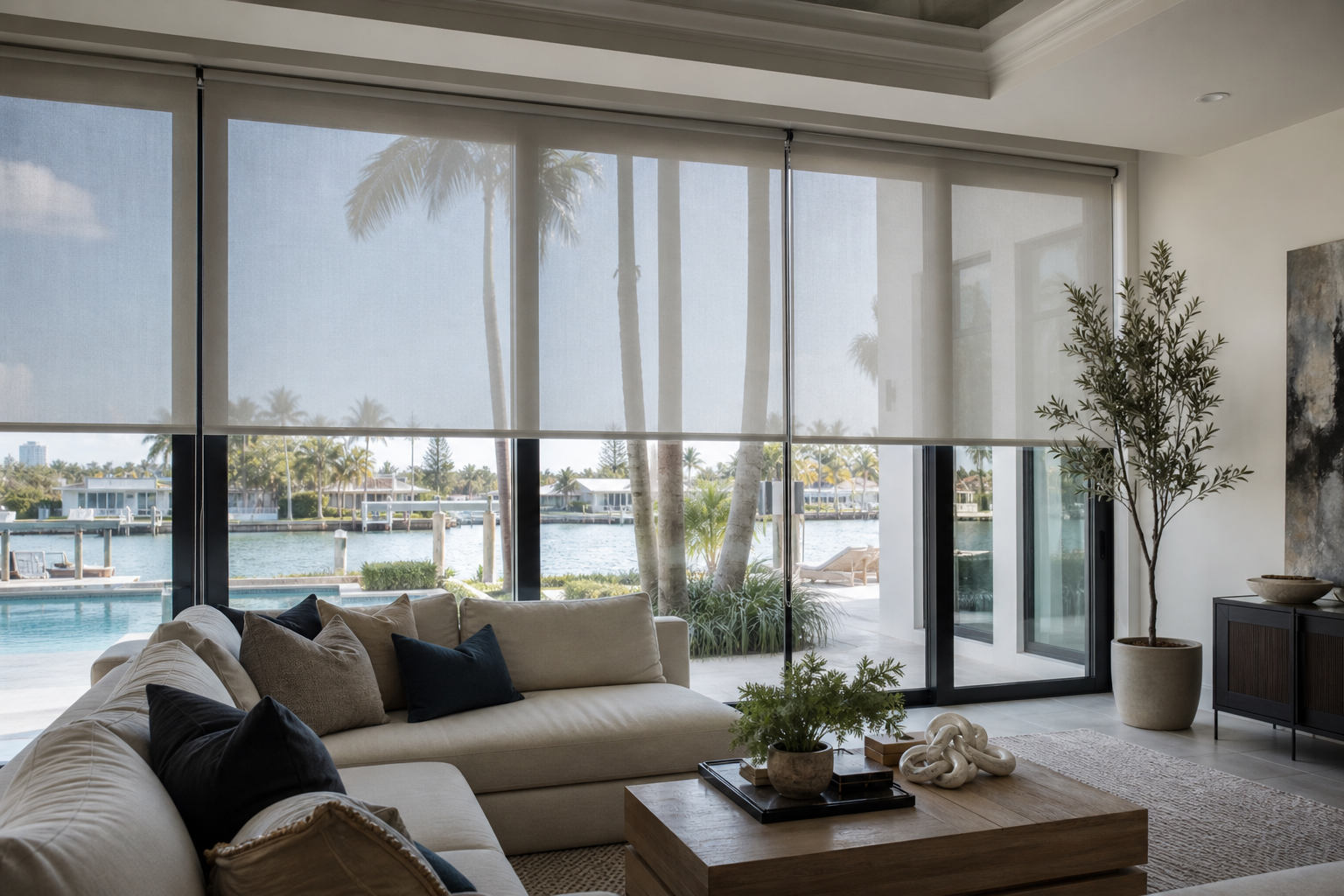
South Florida sunlight brings warmth and brightness into a home, but it can also create challenges for floors, furniture, artwork, window frames, and indoor comfort. Over time, ultraviolet, or UV, exposure may contribute to fading and material deterioration. The right window treatments that block UV rays can help manage the sunlight entering your rooms while supporting privacy, glare control, and a more comfortable interior.
For homeowners in Miami-Dade County, choosing a window treatment is about more than matching a fabric to a paint color. Window direction, glass size, room function, privacy needs, and how much natural light you want to keep all affect which shade is appropriate. This guide explains the main options and what to consider before ordering custom window treatments for a South Florida home.
How Window Treatments Help Reduce UV Exposure
UV rays can pass through uncovered windows along with visible light and solar heat. Window treatments create a filtering or blocking layer between the glass and the room. Depending on the fabric and construction, they may reduce the amount of light and UV radiation that reaches interior surfaces.
Not every shade provides the same level of protection. A light-filtering fabric may preserve a bright, open feel while reducing glare and some UV exposure. A room-darkening or blackout shade offers more substantial light control. Solar shades use specialized screen-like fabrics designed to manage sunlight and glare while maintaining a degree of outward visibility.
The result depends on several factors, including:
- The shade fabric and its openness or density
- Whether the treatment is light filtering, room darkening, or blackout
- How closely the treatment fits the window
- The direction the window faces and the amount of daily sun
- The type of glass and any existing window film
- Whether the shade is consistently closed during periods of intense sunlight
Because performance varies by product and installation, a professional consultation is useful when protecting valuable furnishings or managing difficult sun exposure.
Best Window Treatments That Block UV Rays
Solar Shades for Strong Sun and Glare Control
Solar Shades are often a practical choice for bright South Florida rooms with large windows, expansive views, or direct sunlight. Their screen-like fabric is designed to filter sunlight and reduce glare while allowing some visibility through the window. This can be helpful in living rooms, home offices, and spaces where you want daylight without an entirely closed-in appearance.
Solar Shades are available in different fabric openness levels. A more open fabric generally provides a clearer view, while a tighter weave can offer greater glare and light control. The right selection depends on whether your priority is preserving a view, reducing screen glare, increasing privacy, or limiting sunlight on nearby furnishings.
Keep in mind that daytime privacy and nighttime privacy are not the same. If interior lights are on after dark, people outside may be able to see into a room through a solar shade. Layering solar shades with another window treatment or choosing a different shade style may be appropriate for bedrooms and street-facing rooms.
Blackout Shades for Bedrooms and Media Rooms
Blackout Shades are designed for substantial light control and are a strong option for bedrooms, nurseries, media rooms, and rooms with direct afternoon sun. By reducing incoming light, they can also help limit the sunlight reaching floors, furniture, and artwork.
Blackout performance depends on more than the fabric alone. Light can enter around the sides, top, or bottom of an inside-mounted shade. For homeowners who need the darkest possible room, mounting style and the way the window treatment covers the opening should be discussed during measurement.
Blackout Shades may be especially useful in Miami homes with west-facing windows, where low afternoon sun can create intense glare. They can also complement lighter treatments elsewhere in the home, allowing you to use different levels of light control by room.
Roller Shades for a Clean, Flexible Look
Roller Shades offer a simple profile and a broad range of fabric choices. Depending on the selected material, they can provide light filtering, room-darkening, or blackout performance. This makes them adaptable for modern homes, apartments, offices, and rooms with multiple windows.
For UV-conscious homeowners, the key is selecting a roller shade fabric based on its intended level of light control rather than choosing only by color. A professional window treatment provider can help compare materials and explain how each one may affect brightness, privacy, glare, and the appearance of the room.
Roller Shades can also be coordinated throughout an open-concept floor plan. Different fabrics may be used where necessary while maintaining a consistent color and design direction.
Zebra Shades for Adjustable Light Control
Zebra Shades use alternating bands of translucent and more opaque fabric. Adjusting the bands allows you to shift between a brighter filtered-light setting and a more private, shaded position. This makes them useful in living areas, dining rooms, and other spaces where your needs change throughout the day.
They may help reduce direct sunlight and glare when adjusted appropriately, but they are not automatically equivalent to a blackout treatment. If your main concern is protecting a bedroom from early morning light or creating a darker media room, a dedicated blackout fabric may be more suitable.
Zebra Shades are a good fit for homeowners who want a modern appearance and adjustable control without using separate curtains. They can also be motorized for windows that are difficult to reach or receive strong sunlight during predictable parts of the day.
Choosing the Right UV-Reducing Window Treatment by Room
| Room or situation | Window treatment to consider | Why it may work |
|---|---|---|
| Living room with a view | Solar Shades | Helps manage glare while preserving some outward visibility. |
| Bedroom or nursery | Blackout Shades | Provides stronger light control and supports a darker sleeping environment. |
| Open-concept living area | Roller Shades or Zebra Shades | Offers a clean look with flexible control across multiple windows. |
| Home office | Solar Shades or light-filtering Roller Shades | Can reduce glare on monitors while maintaining useful daylight. |
| Hard-to-reach or oversized windows | Motorized Shades | Makes it easier to adjust shades consistently throughout the day. |
This table is a starting point rather than a substitute for measuring and reviewing the actual room. Two windows in the same home may need different treatments because they face different directions or serve different purposes.
Why Custom Measurement Matters in South Florida Homes
Custom measurement is important when the goal is light and UV control. Gaps around a shade can allow bright light to enter, reducing the overall effectiveness of the treatment and creating uneven exposure on floors or furnishings.
Professional measurement also accounts for details that are easy to overlook, such as:
- Window depth and the available mounting surface
- Handles, locks, cranks, and other obstructions
- Large or unusually shaped windows
- Sliding doors and openings connected to patios
- Whether the shade should be mounted inside or outside the window frame
- How multiple shades will align across a wall
In condos, contemporary homes, and properties with tall glass or expansive openings, consistent alignment can make a meaningful difference in the finished appearance. Custom treatments also make it easier to coordinate light control with the home’s architecture and interior design.
For more guidance on the differences between professionally fitted and ready-made products, see Custom Window Treatments vs. Store-Bought Blinds.
Motorized Shades for Consistent Sun Management
Motorized Shades can make UV-conscious window management more convenient. Instead of leaving shades open all day or manually adjusting hard-to-reach windows, homeowners can operate multiple shades from a convenient control.
Motorization is particularly useful for:
- High windows and tall glass doors
- Large rooms with several windows
- West-facing rooms with intense afternoon sun
- Homes where shades need to be adjusted regularly
- Residents who want a cleaner look without cords
Motorization does not change the filtering ability of the shade fabric itself. Its benefit is easier, more consistent control. A shade only helps manage sunlight when it is positioned to do so, and automation can make that routine simpler.
South Florida Factors to Consider Before Choosing Shades
Window Direction
East-facing windows may receive strong morning sun, while west-facing windows often experience more difficult afternoon glare. South-facing windows can receive substantial daylight for much of the year. Identifying the direction of each window helps determine whether you need gentle filtering, stronger glare reduction, or blackout control.
Heat and Indoor Comfort
UV control and heat control are related but not identical. A treatment that reduces glare may not provide the same solar heat management as a denser or more reflective material. Discuss both concerns when comparing fabrics, especially for rooms that become uncomfortable during the afternoon.
Privacy
Privacy requirements vary by location. A home in a dense Miami neighborhood, a waterfront property, and a residence in a quieter suburban area may need different solutions. Consider both daytime and nighttime privacy, particularly for bedrooms, bathrooms, and windows facing sidewalks or neighboring homes.
Interior Materials
If you have hardwood floors, area rugs, leather furniture, artwork, or other materials that are sensitive to prolonged sunlight, identify those items during the consultation. This helps guide the conversation about fabric density, coverage, and daily shade operation.
Homeowners researching sunlight solutions can also read Best Shades for Florida Sunlight: A Pinecrest Homeowner’s Guide for additional considerations specific to bright Florida conditions.
Common Mistakes to Avoid
- Choosing by color alone: A beautiful fabric may not provide the level of light control your room needs.
- Assuming every shade is blackout: Light-filtering, room-darkening, and blackout fabrics perform differently.
- Ignoring the window opening: Sliding doors, tall windows, and corner windows may require a more detailed design plan.
- Overlooking nighttime privacy: Some screen-like fabrics provide daytime privacy but become more transparent when interior lights are on.
- Skipping professional measurement: Small fit issues can affect appearance, coverage, and everyday operation.
- Using the same treatment everywhere: Bedrooms, offices, living rooms, and patios often have different requirements.
Frequently Asked Questions
What window treatments are most effective for reducing UV rays?
Solar Shades, blackout fabrics, and selected roller or Zebra Shade materials can all help reduce incoming UV exposure. The appropriate option depends on the fabric, window coverage, desired privacy, and how much natural light you want to retain.
Do blackout shades block UV rays?
Blackout Shades provide substantial light control and can help limit sunlight reaching interior surfaces. Their overall performance depends on the fabric, fit, mounting style, and gaps around the window.
Are solar shades better than blackout shades for a living room?
Often, Solar Shades are a good fit when you want to reduce glare while keeping some daylight and an outward view. Blackout Shades may be more appropriate when darkness and stronger privacy are the main priorities.
Can window treatments prevent furniture from fading?
They can help reduce the sunlight and UV exposure that contribute to fading, but no interior treatment should be considered a complete guarantee against color change. Fabric choice, window glass, exposure, and how consistently the treatment is used all matter.
Are motorized shades useful for UV protection?
Motorized Shades can make it easier to close treatments during periods of intense sunlight, especially on high or hard-to-reach windows. The UV-reducing performance still comes from the selected shade material and coverage.
Find the Right Window Treatments for Your Home
The best window treatments that block UV rays balance protection with the way you want your rooms to look and feel. Solar Shades may suit bright spaces where you want to preserve a view, while Blackout Shades can provide stronger control in bedrooms and media rooms. Roller Shades, Zebra Shades, and Motorized Shades offer additional options for coordinating design, privacy, convenience, and daily sunlight management.
Floridian Blinds helps homeowners and property professionals in Miami, Kendall, West Kendall, Doral, Coral Gables, Pinecrest, Homestead, Miami Beach, Key Biscayne, South Miami, Cutler Bay, Palmetto Bay, and surrounding South Florida communities evaluate custom window treatment options. Contact us for a free consultation and measurement.