Custom Shades for Designer Homes: A Practical Guide to Style, Comfort, and Light Control
Learn how custom shades can complement designer homes while improving privacy, light control, comfort, and smart-home convenience in South Florida.
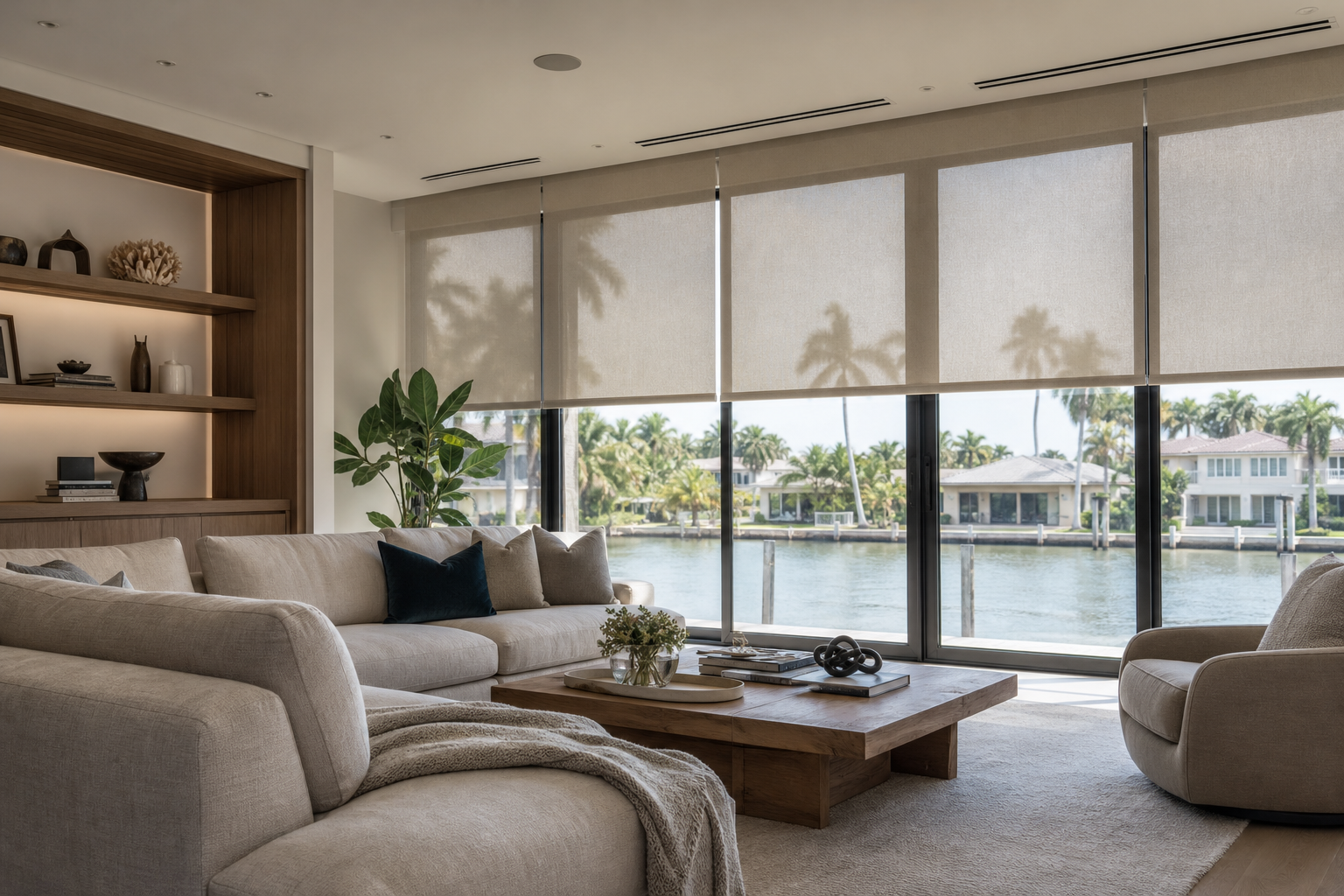
In a designer home, window treatments are part of the architecture and interior design—not an afterthought. The right custom shades can frame a view, soften strong sunlight, support the room’s color palette, and provide privacy without taking attention away from carefully selected finishes and furnishings.
For South Florida homeowners, choosing shades also involves practical concerns. Intense sunlight, heat, glare, humidity, large windows, and indoor-outdoor living all influence which window treatment will perform well in a particular room. Custom sizing and professional installation help ensure the finished result looks intentional and functions smoothly.
This guide explains how to select custom shades for designer homes, including the main shade styles, design considerations, automation options, and room-by-room recommendations.
Why Custom Shades Matter in a Designer Home
Ready-made window coverings may work for standard windows, but designer homes often include large expanses of glass, unusually shaped windows, sliding doors, layered architectural details, or rooms with very specific lighting needs. Custom shades are designed around the window, the room, and the homeowner’s priorities.
A custom approach can help with:
- Proportion: Shades can be sized to suit tall windows, wide openings, and modern architectural lines.
- Design continuity: Similar fabrics, colors, or operating styles can create a cohesive look throughout the home.
- Light control: Different rooms can receive different levels of filtering or room darkening.
- Privacy: Shades can be selected based on street exposure, neighboring homes, bathrooms, bedrooms, and nighttime visibility.
- Comfort: Properly selected shades can help manage glare and the effect of direct sunlight on occupied spaces.
- Convenience: Motorized shades can simplify daily adjustments, especially on large or hard-to-reach windows.
Professional measurement is especially important when a clean, built-in appearance is part of the design goal. Small inconsistencies in width, mounting position, or alignment can be more noticeable in a minimalist interior.
How to Choose a Shade Style for a High-End Interior
The best shade style depends on more than appearance. Consider how much light the room receives, whether privacy is needed during the day or at night, how often the shades will be adjusted, and how the window connects to the rest of the space.
Roller Shades for Clean, Modern Lines
Roller shades are a natural fit for contemporary and transitional interiors because of their simple profile. When raised, they keep the window area visually open. When lowered, they provide a smooth surface that can blend with the wall or add a controlled design accent.
Roller shades can be considered for living rooms, dining areas, bedrooms, home offices, and kitchens. The key decision is the fabric’s level of openness and light control. A more light-filtering option may preserve brightness while reducing glare, while a room-darkening option may be more suitable for bedrooms or media spaces.
For design guidance specific to food-preparation spaces, see How to Choose Roller Shades for Modern Kitchens.
Solar Shades for Views and Glare Control
Solar shades are often considered for rooms with expansive windows and strong sunlight. They can help reduce glare while maintaining a connection to the outdoor view, making them useful in living rooms, offices, media areas, and spaces facing bright patios or landscaping.
Solar shades do not provide the same nighttime privacy as an opaque shade when interior lights are on. Homeowners who want daytime view-through plus evening privacy may need to consider a layered approach or a different shade style for specific rooms.
Learn more about this consideration in Solar Shades and Nighttime Privacy: What South Florida Homeowners Should Know.
Blackout Shades for Bedrooms and Media Rooms
Blackout shades are designed for homeowners who want stronger control over incoming light. They can be useful in primary bedrooms, guest rooms, nurseries, media rooms, and spaces where glare or early morning brightness affects comfort.
Blackout performance depends on the shade material and how the shade is installed. Light can still enter around the edges of a window if the design does not account for those gaps, so professional measurement and appropriate mounting are important when room darkening is a priority.
For more ideas on coordinating room-darkening shades with an upscale bedroom, read Blackout Shades That Match Luxury Bedrooms.
Zebra Shades for Adjustable Light and Privacy
Zebra shades use alternating bands of sheer and more opaque fabric to create adjustable levels of light and privacy. Their changing horizontal pattern can add visual interest while giving homeowners more flexibility than a basic open-or-closed shade.
They may be a good fit for living rooms, bedrooms, dining rooms, and other areas where the homeowner wants to adjust the atmosphere throughout the day. The fabric pattern should be coordinated with the room’s furnishings and architectural details rather than selected in isolation.
Design Considerations for Custom Shades
Coordinate With the Architecture
Start with the home’s overall design language. A streamlined shade may complement flat-panel cabinetry, polished surfaces, and contemporary furnishings. A softer fabric and warmer color may work better with natural wood, textured upholstery, or transitional details.
Consider whether the shades should blend into the wall, coordinate with the window trim, or create a deliberate contrast. In many designer interiors, subtle coordination produces a more timeless result than choosing a shade as a standalone statement piece.
Use Consistent Design Without Using the Same Shade Everywhere
A home can feel cohesive without every window receiving the exact same treatment. For example, a homeowner might use a consistent color family throughout the main living areas while choosing solar shades for glare-prone windows, blackout shades for bedrooms, and motorized shades for difficult-to-reach openings.
Repeating a similar headrail profile, fabric tone, or operating style can connect these different solutions visually.
Pay Attention to Large Windows and Sliding Doors
Large glass areas are common in South Florida homes and often connect interior rooms to patios, balconies, pools, or landscaped areas. These openings require more planning than a standard single window.
Before selecting a shade, consider:
- Whether the opening is used as a primary walkway
- How much stack space is available when the shade is open
- Whether the treatment should preserve a wide outdoor view
- How privacy changes from daytime to nighttime
- Whether multiple shades should align across the room
- Whether motorization would make daily operation easier
A professional consultation can help identify clearance and mounting issues before the final treatment is selected.
Motorized Shades for Designer Homes
Motorization can support both the appearance and functionality of a high-end home. Without cords or manual controls interrupting the window area, motorized shades can maintain a clean visual presentation. They are also convenient for tall windows, multiple openings, and rooms where shades need to be adjusted regularly.
Homeowners may use motorized shades to:
- Adjust several shades together
- Control hard-to-reach windows
- Manage glare during work or entertainment
- Maintain privacy in rooms facing neighboring properties
- Open shades in the morning and close them later in the day
Motorization is not necessary for every window. It may make the most sense for large living areas, bedrooms with multiple windows, home offices, tall glass, and spaces where consistent positioning is part of the design plan. Compatibility with the home’s preferred controls or smart-home system should be discussed during the consultation.
South Florida Factors to Consider
Window treatments in Miami-Dade County and surrounding South Florida communities need to account for the local environment. Bright sunlight can make rooms uncomfortable and create reflections on televisions, monitors, artwork, and glossy surfaces. Windows facing west or southwest may receive especially strong afternoon light.
Privacy also changes depending on the home’s surroundings. A property in a dense neighborhood, a Miami condo, or a home near a busy street may need a different solution than a private property with landscaping between the windows and the outside.
For each room, ask:
- When is the sunlight strongest?
- Is the main concern glare, heat, privacy, darkness, or appearance?
- Do you want to preserve the outdoor view?
- Will the shades be adjusted frequently?
- Are there children, pets, or furniture that affect access to the window?
- Does the room connect directly to a patio or outdoor entertaining area?
These questions help narrow the options before choosing colors and fabrics.
Room-by-Room Shade Recommendations
| Room | Common priorities | Shade options to consider |
|---|---|---|
| Living room | View preservation, glare control, privacy, design continuity | Solar shades, roller shades, zebra shades, motorized shades |
| Primary bedroom | Privacy, darkness, comfort, convenient operation | Blackout shades, roller shades, motorized shades |
| Home office | Screen glare, daylight balance, privacy | Solar shades, roller shades, motorized shades |
| Dining room | Atmosphere, privacy, coordination with furnishings | Zebra shades, roller shades, custom light-filtering shades |
| Media room | Reduced brightness and reflections | Blackout shades, motorized shades |
| Kitchen | Clean appearance, practical light control, easy operation | Roller shades or other streamlined custom shades |
| Sliding doors | Clear passage, privacy, view, convenient adjustment | Large-opening shades, motorized shades, coordinated patio solutions |
Why Professional Measurement and Installation Matter
Custom shades should be measured for the actual window rather than estimated from general dimensions. Professional measurement helps account for inside or outside mounting, trim, handles, uneven openings, door clearance, and the alignment of multiple shades.
Installation is equally important to the finished appearance. Correct positioning can help the shade operate smoothly and sit properly within the room’s sightlines. It also reduces the risk of selecting a treatment that looks good in a sample but is impractical for the completed opening.
Bring photos of the room, furniture plans, paint or fabric samples, and any smart-home preferences to the consultation if available. These details can make it easier to coordinate the window treatments with the rest of the design.
Questions to Ask Before Selecting Custom Shades
- What level of light control does each room need?
- Do the windows require daytime privacy, nighttime privacy, or both?
- Should the shade blend in or become a design feature?
- Will the window be difficult to reach or operate manually?
- Does the shade need to coordinate with nearby sliding doors or patio openings?
- What mounting style will create the cleanest finished appearance?
- Would a consistent motorized control plan be useful across several rooms?
Frequently Asked Questions
Are custom shades worth considering for a designer home?
Custom shades can be worthwhile when the home has large, unusual, or closely spaced windows, or when appearance and precise light control are important. They allow the treatment to be planned around the room instead of forcing the room to accommodate a standard size.
Which shades are best for preserving a view?
Solar shades are commonly considered when homeowners want to reduce glare while maintaining visibility through the window during the day. Privacy and visibility can change at night, so the room’s evening use should also be considered.
Do blackout shades completely eliminate light?
Blackout shades are intended to provide strong room darkening, but light may still enter around the edges depending on the window, mounting method, and shade design. Professional measurement can help address those gaps.
Can motorized shades be used on large windows?
Motorized shades can be a convenient option for large or hard-to-reach windows. The appropriate operating approach depends on the opening, the shade design, and the homeowner’s control preferences.
Should every room use the same type of shade?
No. A coordinated home may use different shade styles based on each room’s needs. Consistent colors, fabric families, or operating systems can create visual harmony while allowing better performance in each space.
Plan Custom Shades Around the Whole Home
The most successful window treatment plan balances design, privacy, sunlight, comfort, and everyday operation. In a South Florida home, that may mean combining solar shades in bright living areas, blackout shades in bedrooms, zebra shades where flexibility is important, and motorization on large or difficult-to-reach windows.
Floridian Blinds helps homeowners plan custom window treatments with professional measurement and installation throughout Miami-Dade County and surrounding South Florida communities. Contact us for a free consultation and measurement to discuss the right shade options for your home.