Best Shades for West-Facing Windows: A South Florida Guide
Learn which shades work best for west-facing windows, including solar, blackout, roller, zebra, and motorized options for South Florida homes.
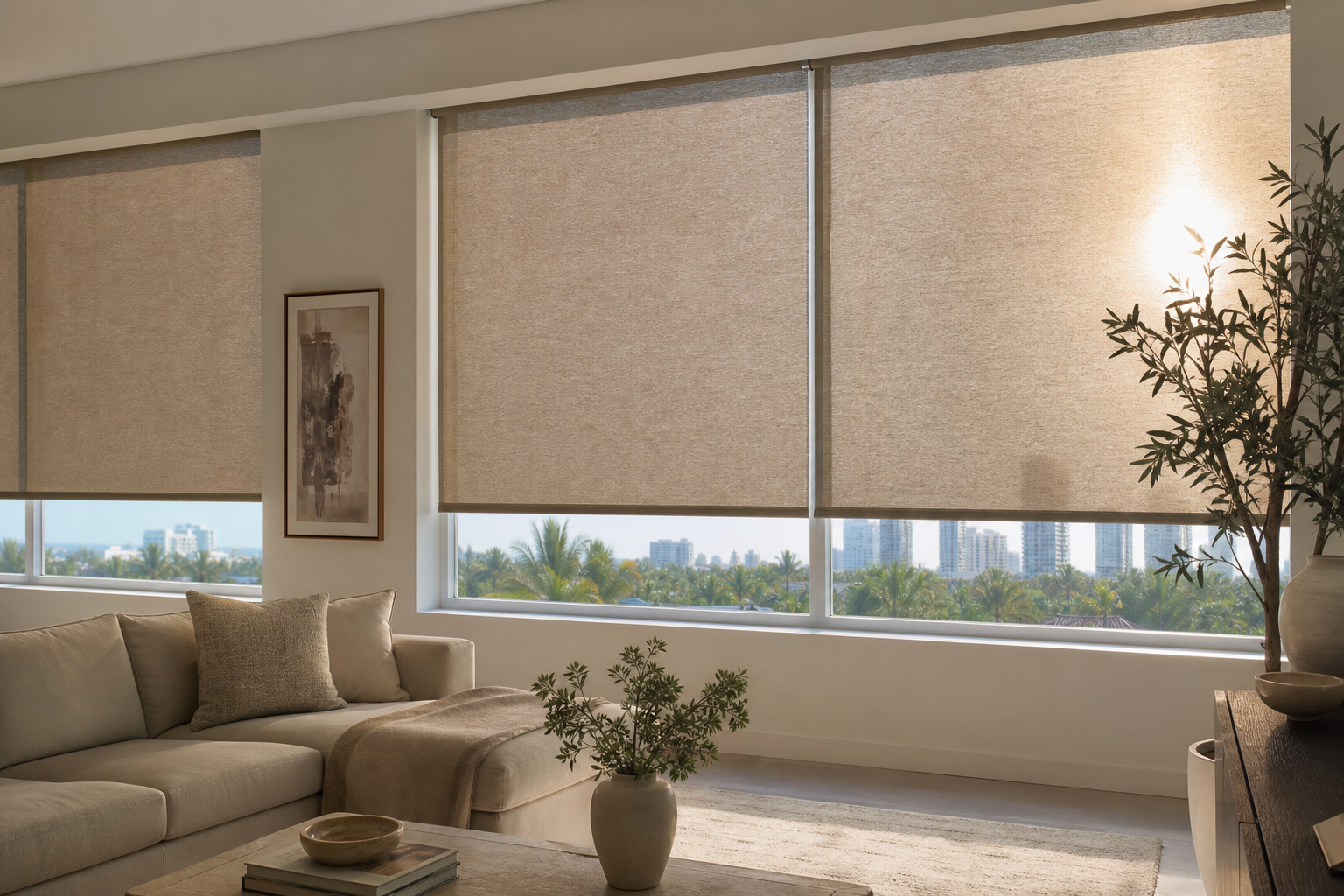
West-facing windows bring warm afternoon light into a home, but they can also create glare, heat, and fading concerns during the brightest part of the day. Choosing the best shades for west-facing windows means balancing light control, privacy, appearance, and convenience rather than selecting a single style based only on color or price.
For homeowners in Miami-Dade County and throughout South Florida, this decision is especially important. Strong afternoon sun can make a living room uncomfortable, interfere with television and computer screens, and increase the demand on your cooling system. Custom window treatments can help you manage these conditions while complementing your interior design.
The right choice depends on how each room is used, how much natural light you want to keep, and whether you need complete privacy or flexible control. Below, we compare practical options for west-facing windows and explain what to consider before scheduling a professional measurement.
Why west-facing windows need specialized light control
East-facing windows receive direct morning sun, while west-facing windows typically receive direct sunlight later in the day. That timing matters because afternoon sun often arrives when families are using living rooms, dining areas, home offices, and entertainment spaces.
West-facing windows may contribute to:
- Glare on televisions, monitors, and reflective surfaces
- Afternoon heat near the glass
- Fading of flooring, furniture, artwork, and fabrics over time
- Reduced privacy as outdoor light changes throughout the day
- Uneven lighting that makes a room feel too bright on one side
Large windows and sliding glass doors can make these effects more noticeable. In South Florida homes, the combination of intense sunlight, warm weather, and indoor-outdoor living makes flexible window shading particularly useful.
Best shades for west-facing windows
1. Solar shades for glare, UV exposure, and daytime comfort
Solar shades are often a strong option for west-facing windows when the main concern is harsh sunlight and glare. Their screen-like fabric filters incoming light while preserving some visibility to the outside, depending on the fabric and openness selected.
They can work well in living rooms, home offices, and spaces where you want to reduce the intensity of afternoon sun without making the room completely dark. Solar shades also provide a clean, contemporary look that fits modern South Florida interiors.
There is an important privacy consideration: solar shades generally offer more daytime privacy than nighttime privacy. When the interior is brighter than the exterior, people outside may be able to see in. If nighttime privacy is a priority, you may need an additional treatment, a different fabric, or a layered approach.
2. Blackout shades for bedrooms, media rooms, and strong afternoon sun
Blackout shades are a practical choice when you need substantial light reduction and privacy. They are especially useful in bedrooms, nurseries, media rooms, and spaces where glare control is more important than maintaining a view.
For a west-facing bedroom, blackout shades can make it easier to control the bright late-day light that enters before bedtime. In a media room, they can reduce reflections that interfere with viewing. Blackout fabrics may also help create a more comfortable environment near sunny glass, although the overall result depends on the window, installation, fabric, and room conditions.
Homeowners should ask how much light reduction they need and whether small light gaps around the shade would be acceptable. A professional consultation can help determine the appropriate mounting style and coverage for the window.
3. Roller shades for a simple, versatile solution
Roller shades are a flexible choice for west-facing windows because they are available in a wide range of fabrics, colors, and light-control levels. You can choose a more open fabric for filtered light or a room-darkening option for stronger afternoon control.
Their streamlined profile works well in contemporary homes, condos, offices, and rooms with multiple windows. Roller shades can also be coordinated across different rooms while using different fabric types according to each room’s needs.
When selecting roller shades, consider the window’s orientation, the furniture placement, and whether the room needs daytime glare control, nighttime privacy, or both. A single shade style may not be ideal for every west-facing window in the home.
4. Zebra shades for adjustable light and privacy
Zebra shades use alternating bands of sheer and more opaque fabric to create adjustable light control. By shifting the bands, you can allow filtered daylight into the room, reduce visibility, or close the shade more fully.
This flexibility makes Zebra Shades appealing for living rooms, dining areas, and open-concept spaces where the desired light level changes throughout the day. They can provide a softer, more decorative appearance than a fully closed blackout treatment while still offering meaningful control over afternoon brightness.
Zebra shades may not be the first choice when complete darkness is the primary goal. For bedrooms or dedicated media rooms, compare them with blackout shades and review how the selected fabric performs before making a decision.
5. Motorized shades for hard-to-reach or frequently adjusted windows
Motorized shades can be especially useful for west-facing windows because afternoon light changes quickly. With motorization, you can adjust shades without walking from room to room, which is convenient for large windows, high windows, sliding doors, and open-plan interiors.
Motorized shades may also be helpful when several west-facing windows need to be adjusted together. Instead of manually operating each shade as the sun moves, you can manage the group more efficiently. During a consultation, ask about available controls and whether the shade system can be coordinated with the way you use your home.
For homeowners considering smart-home integration, discuss compatibility before selecting the shade and control system. The motor, controls, and window treatment should be planned together rather than treated as separate purchases.
Comparing shade options for west-facing windows
| Shade type | Best suited for | Main benefit | Important consideration |
|---|---|---|---|
| Solar shades | Living rooms and home offices | Reduces glare while maintaining some outdoor visibility | Nighttime privacy may require a different fabric or added treatment |
| Blackout shades | Bedrooms and media rooms | Strong light reduction and privacy | May limit the view and natural light when closed |
| Roller shades | Most rooms | Simple design with flexible fabric choices | Performance depends on the selected fabric and coverage |
| Zebra shades | Living and dining spaces | Adjustable light and privacy | Not every fabric provides the same level of room darkening |
| Motorized shades | Large, high, or frequently adjusted windows | Convenient operation and coordinated control | Control options should be planned during selection |
How to choose the right shade for each room
The best shades for west-facing windows often vary from room to room. Before choosing a product, consider the following questions:
- How is the room used? A bedroom may need privacy and light reduction, while a living room may benefit from filtered daylight and a maintained view.
- When is the window most uncomfortable? If glare is the main issue in the late afternoon, focus on solar fabric, room-darkening materials, or motorized adjustment.
- Do you need daytime and nighttime privacy? Fabric opacity and the lighting relationship between the interior and exterior affect privacy at different times.
- How important is the view? Solar shades can preserve more outdoor visibility than blackout treatments, but the tradeoff depends on the fabric selected.
- Are the windows difficult to reach? Motorization may be worth considering for tall windows, wide openings, or multiple shades that need frequent adjustment.
- How should the shades coordinate with the room? Color, texture, and mounting decisions affect how the treatment looks when open and closed.
It can also help to review your needs by room. Our guide on how to choose window treatments room by room provides additional ideas for matching window treatments to everyday use.
Custom measurement matters for west-facing windows
West-facing windows are not always standard in size or shape. A home may have individual windows, a bank of windows, French doors, or large sliding glass doors that require different mounting and operating considerations.
Professional measurement helps account for the actual window dimensions, trim, handles, depth, and nearby walls or furniture. It also helps determine whether an inside mount or outside mount is more suitable for the desired appearance and light control.
Custom planning is particularly helpful when several windows need to look consistent but do not have identical dimensions. It allows the treatment to be selected around the room instead of forcing a standard-size product to fit an existing opening.
Design considerations for South Florida homes
Many South Florida homes emphasize clean lines, natural light, and a connection between indoor and outdoor spaces. Shades for west-facing windows should support those design priorities while addressing the practical effects of afternoon sun.
Neutral fabrics can create a calm, modern appearance, while subtle textures can add visual interest without competing with furniture or architectural details. In condos and homes with expansive glass, consistent shades can help unify the view from room to room.
For additional ideas, see our guide to shades for Florida sunlight. Homeowners with tall glass or dramatic window proportions may also benefit from reviewing our South Florida guide to window treatments for high ceilings.
Common mistakes to avoid
- Choosing based only on color: A fabric may look attractive but still provide too much glare or too little privacy for the room.
- Assuming every window needs the same treatment: Bedrooms, offices, and living spaces often have different light-control requirements.
- Ignoring nighttime privacy: A shade that works well during the day may not provide the same privacy after interior lights are turned on.
- Waiting until after furniture is installed: Furniture placement can affect access to shades and the amount of glare experienced at seating or work areas.
- Overlooking operation: Wide or high windows may be inconvenient to adjust manually, making motorization worth discussing early.
Frequently asked questions
What are the best shades for west-facing windows in a living room?
Solar shades, roller shades, and Zebra Shades can all work well, depending on the desired balance of glare reduction, view, privacy, and design. Solar shades are useful when maintaining some visibility is important, while Zebra Shades offer flexible adjustment.
Are blackout shades a good choice for west-facing bedrooms?
They can be. Blackout shades are useful when bright afternoon light, privacy, or a darker sleeping environment is a priority. Ask about coverage and possible light gaps during the consultation.
Do solar shades provide privacy at night?
Solar shades typically provide more privacy when it is brighter outside than inside. At night, interior lighting can reduce that privacy. A different fabric or complementary window treatment may be needed for nighttime privacy.
Should west-facing window shades be motorized?
Motorization is worth considering for large, high, hard-to-reach, or frequently adjusted windows. It can also make it easier to manage several west-facing windows as afternoon light changes.
Can different shade types be used in the same home?
Yes. Many homeowners choose blackout shades in bedrooms, solar shades in living areas, and roller or Zebra Shades in spaces that need adjustable light control. Consistent colors and design details can keep the home visually coordinated.
Find the right shades for your west-facing windows
The best shades for west-facing windows depend on your room’s purpose, the amount of afternoon sun, your privacy expectations, and how you want to operate the treatment. In South Florida, custom planning can make it easier to address glare, heat, strong sunlight, and large glass openings without sacrificing modern design.
Floridian Blinds can help you compare solar, blackout, roller, Zebra, and motorized shade options for your home or property. Contact us for a free consultation and measurement.